Project Context & Operational Environment
Managing and storing sealed radioactive sources offshore—whether aboard platform modules, support vessels, or FPSOs—poses unique challenges: limited space, motion-induced stresses, marine corrosion, and stringent maritime and radiation‐safety regulations. RadXion’s assessment covers both temporary at‐sea storage (e.g., during drilling campaigns) and permanent on‐platform source banks (e.g., for well-logging sources).
Regulatory Framework & Licensing Requirements
-
Maritime & Nuclear Authorities
-
Coordinate with flag‐state maritime regulators (e.g., the UAE’s Maritime Sector, IMO guidelines) and national nuclear/radiation bodies (FANR, K.A.CARE) to ascertain overlapping requirements.
-
-
Application Dossier
-
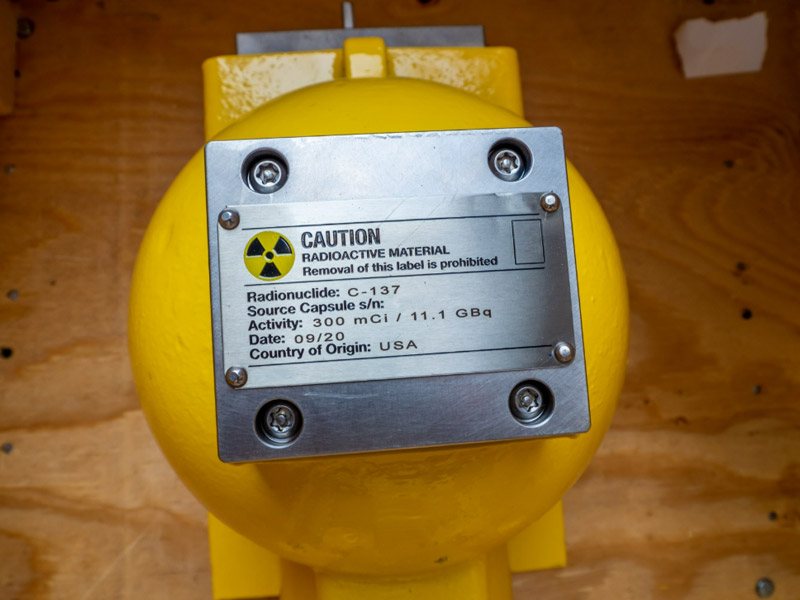
Source inventory: activities, encapsulation type (e.g., Am-241, Cs-137 in stainless steel capsules)
-
Offshore facility drawings: designated source-storage rooms, access routes, confinement barriers
-
Environmental Impact Assessment (EIA) addendum addressing potential sea‐water exposure and spill scenarios
-
-
Authorization Process
-
Submit “Authorization to Install” for permanent on‐platform vaults and “Authorization to Transport and Store” for temporary sea‐borne storage units.
-
Liaise with Port State Control and Civil Defence Marine Protection units for joint inspections.
-
Storage-Vault & Shielding Design
-
Vault Structural Integrity
-
Design a dedicated stainless‐steel lined vault, welded to the deck support structure, capable of withstanding platform motions, salt spray, and fire loads.
-
-
Shielding Calculations
-
Use point‐source and line‐source build‐up factors per NCRP‐151 to size lead or tungsten alloy panels, ensuring external dose‐rates ≤ 0.02 mSv/h in adjacent work and escape‐route zones.
-
Account for multi‐directional exposure due to ship heave and roll by modeling worst‐case orientations in Monte Carlo tools (e.g., Geant4).
-
Environmental & Structural Risk Assessment
-
Corrosion & Seawater Interaction
-
Specify marine‐grade coatings (e.g., 316L stainless backup) and desiccant systems to prevent container seal degradation.
-
-
Motion and Vibration
-
Perform FEA on storage racks to verify that accelerations up to 0.5 g in all axes do not compromise source capsules or shielding assemblies.
-
-
Fire & Flood Scenarios
-
Integrate the vault into the platform’s fire‐rated compartments and confirm watertight integrity against 1 m inundation for at least 2 hours.
-
Instrumentation & Monitoring Systems
-
Fixed Radiation Monitors
-
Install gamma‐rate detectors on bulkhead walls adjacent to the vault, calibrated for offshore temperature and humidity ranges, linked into the platform’s safety PLC.
-
-
Continuous Environmental Sampling
-
Equip vault ventilation exhaust (if used) with particulate filters and real‐time gamma spectrometry to detect capsule breach events.
-
-
Remote Data Logging
-
Route all dose‐rate and environmental sensor data to the platform’s Distributed Control System (DCS) with alarm thresholds for automatic source lockdown.
-
Access Control & Interlock Integration
-
Mechanical Interlocks
-
Vault door equipped with two‐factor locks (engineer key + access code), interlocked with radiation detectors so that opening is inhibited if dose‐rate > 0.1 µSv/h inside.
-
-
Procedural Safeguards
-
Restricted access permits, time‐limited authorization cards, and mandatory two‐person rule for any source movement.
-
Personnel Protection & Emergency Preparedness
-
Marine-Specific PPE
-
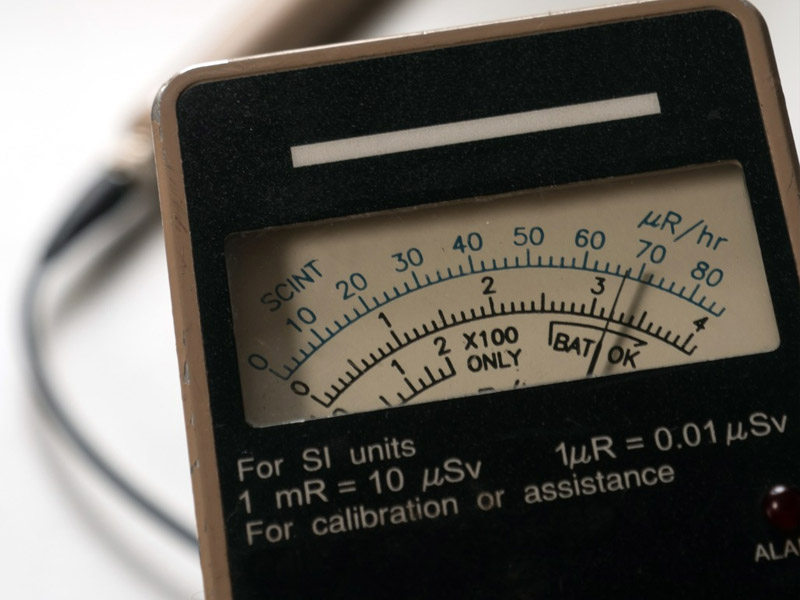
Corrosion‐resistant, anti‐slip footwear and offshore‐rated coveralls; portable radiation meters rated for marine environments.
-
-
Drills & Contingencies
-
Simulated “source‐drop” and “water ingress” drills integrated into platform emergency response exercises, coordinating with the platform’s muster‐station protocols.
-
Commissioning, Survey & Validation
-
Mechanical & Radiological Acceptance
-
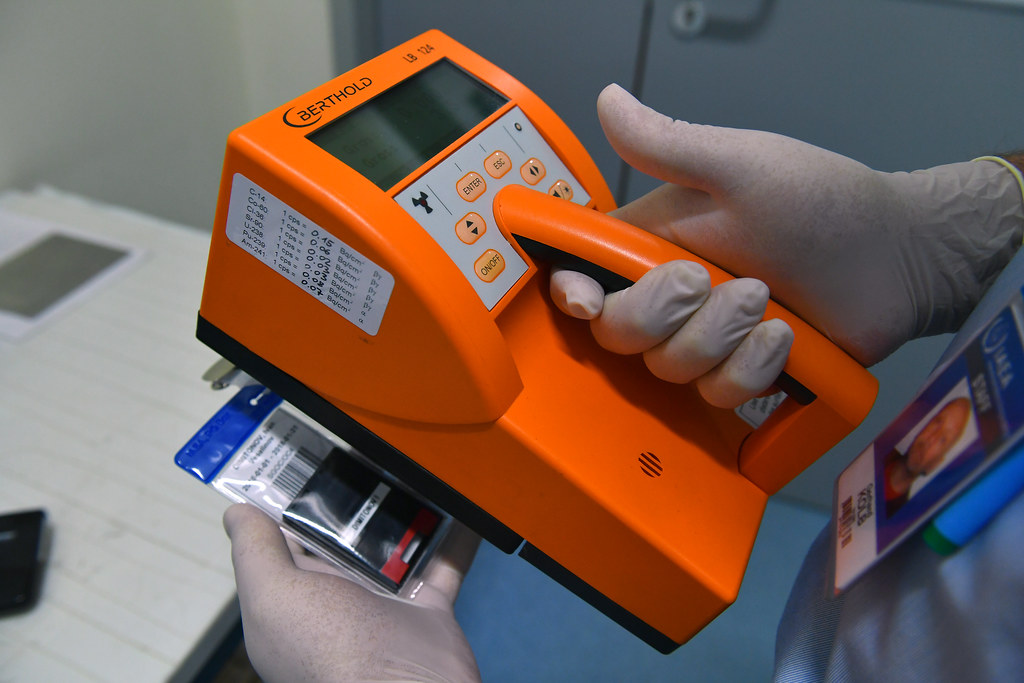
Structural sign-off by marine engineers; leak‐test and wipe‐test of each source capsule; full deck-level dose‐mapping under static and dynamic (simulated roll) conditions.
-
-
Performance Verification
-
Demonstrate via time-lapse logging that vault dose‐rates remain stable within design margins over a 72-hour sea‐state simulation.
-
Outcomes & Operational Benefits
-
Certified Offshore Storage
-
Regulatory “Safe to Operate” certificate granted on first inspection, enabling uninterrupted drilling/logging schedules.
-
-
Robust Marine Performance
-
Vault design exceeded corrosion and vibration criteria, reducing maintenance intervals by 30 %.
-
-
Enhanced Safety & Compliance
-
Dose‐rates in adjacent living quarters and escape routes measured < 0.005 mSv/h; no contamination events recorded in first 12 months.
-
-
Integrated Monitoring
-
Real-time telemetry ensures remote shore-based oversight and rapid response to any alarm conditions.
-
By harmonizing maritime engineering, advanced shielding analytics, and stringent radiation‐safety protocols, RadXion delivers turnkey offshore source-storage solutions that comply with all GCC marine and nuclear regulations while safeguarding personnel, assets, and the environment.